Current
Efficient Window Technologies
Currently, the best windows available
include: double- and triple-paned, insulated, glazed, smart, and thin-film electric
windows. Benefits
gained from utilizing these technologies include reduced fading of interior decorations,
less unwanted energy loss out of buildings, reduced levels of captured heat within a
building, and the reduction of glare on surfaces. Ultimately, by improving window
technology, benefits can be maximized while energy costs are lowered.
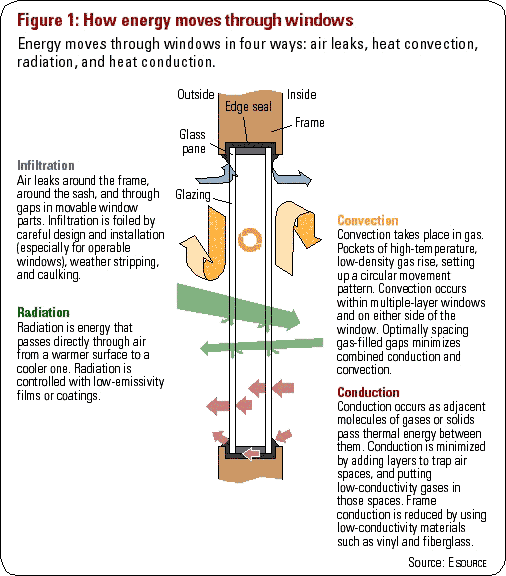
Image courtesy of Los Angeles Department of
Water and Power
Window Efficiencies: U-Values And
R-Values
The window industry measures window efficiency in
terms of U-values and R-values. U-values measure insulating efficiency and conducted heat
gain or loss through a window. They are measured in BTUs (British Thermal Units) per hour
per square foot per degree Fahrenheit (btu's/hour/square foot/°F). An R-value is the
reciprocal of a U-value (U = 1/R). The lower the U-value, the better the insulating
performance against conducted heat gain or loss. A window system with a U-value of 0.35
outperforms a system with a U-value of 1.1.
Example: "Consider a 6 sq.ft.window
in Minneapolis, winter night, outdoor temperature 5°F, indoor temperature 70°F. The
fenestration system has an overall U-value (including frame, edge of glass, and center of
glass) of 0.40."
| VINYL WINDOW FRAME, 2.5MM GLASS,
1/2" AIR SPACE |
OVERALL WINDOW U-VALUE |
| single glazed |
0.89 |
| double glazed |
0.46 |
| double glazed Sungate 100 #3 surface |
0.35 |
Types of Windows
Single Paned
In the past, most homes only had single paned
windows. They are the simplest, and in most cases, the most inefficient windows
available. Consisting of a sole piece of glass inserted into a frame, single paned windows
have poor insulation and little resistance to radiant heat flow. However, some single
paned windows implement metal frames which conduct heat; while more efficient windows have
thermal breaks which prevent heat flow.
Insulated Glass Units (IGU's)
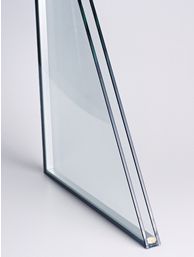
Image courtesy of National Glass
Company
|
An insulated window
is 50% more energy efficient than a single, glazed window. They consist of double panes of
glass with an air space in between. The locked in air pocket is what allows for the energy
efficiency of the window. To insure that moisture within the air space will not cause fog,
perimeter bars that will form the outer edges of the window are filled with a drying agent
called a dessicant, such as sodium chloride, to absorb any residual moisture that might
remain after the window is put together. |
Multiple Paned Multiple paned
windows, such as double- and triple-paned windows, are a variation of insulated
windows. They are created by adding an additional pane of glass to an existing window,
creating a trapped air space of about 1/8" to 1/2" which provides higher
insulation than single-paned windows. The air between windows will retain heat, keeping a
building warmer in the winter Occasionally, manufacturers use an inert gas to replace the
air between the panes of glass. For this, argon gas is most commonly used because of its
higher insulating value and its relatively low cost. |
Air Flow
An air flow window is
constructed of a double glazed window with an exterior single paned window so that air may
flow in between. Air flow construction not only improves thermal performance, but it also
allows for controlled air changes within a building. There are two types of air flow
windows: an exhaust air window and supply air window.
Supply air windows draw outside air
into buildings. When outdoor air is cooler than that inside, it flows over the inside
panes and absorbs heat from them. This warmed air heats the inside of a building and can
lead to lower heating requirements. "Test models indicate that the average air
temperature rise inside the window is approximately 50% of the difference between interior
and exterior temperatures." |
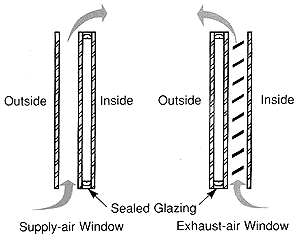
Image courtesy of Canada's Construction
Technology Center:
Institute for Research in Construction
|
An exhaust air window forces indoor air through the window space and then exhausts
it outdoors. When it is cool outside, warm inside air transfers heat to the window.
This reduces the temperature differential across inside panes and reduces heat loss. If
cooling is needed, an exhaust air window can expel some of the solar heat gained by the
window and lower the need for cooling.
|
Glazings &
Coatings
Low-E
Low-e glazings are
thin, clear coatings of undetectable metal oxide or semiconductor films that are placed
right onto the glass. They are called low-e for low-emissivity, because they help to
increase the effeciency of a window. Emissivity is a measure of a material’s ability
to radiate energy, and the lower the emissivity of a coating the better the glass performs
in the reduction of heat transfer.The application of low-e glazings is done in either soft
or hard coats. Soft coats are delicate and their energy performance is better than hard
coats, but they degrade when exposed to air and moisture. Hard coatings are less easily
damaged and are utilized where add-ons are used.
Low-e coatings usually face
air spaces within windows and lessen the heat flow between panes. The coating also
absorbs and reflects radiant heat and ultraviolet rays. Basically, low-E coatings work by
controlling specific portions of the sun’s energy that enter through a window:
ultraviolet light, visible light, and infrared energy. Because high levels of ultraviolet
light can be harmful to humans and damage and fade furnishings, it is beneficial to
exclude this type of light, but desirable to keep visible light, which provides natural
daylight- the cheapest source of lighting available. Infrared energy that enters may be
desirable or undesirable. It may be wanted for sunshine and warmth for personal comfort or
to naturally heat a room’s interior (passive solar heat gain/heating), but may be
undesirable when it becomes discomforting, such as when a room becomes hot and strains are
placed on air-conditioning systems.
Windows which include low-e films can
reduce energy loss by as much as 30% to 50%, and cost only 10% to 15% more than windows
without these films. Low-e glass is designed to be extremely effective during the summer,
by reflecting much of the sun's heat away from the inside of the home. But when applied to
the outside of a window, it can reflect between 70%-75% of the heat that would normally be
lost to the outdoors back into the home. During the cooling season, low-e glass reflects
about 25% more heat back inside than a single-paned window and about 11% more than a
standard double-paned window. The U-value for a double-paned window with low-e glass
starts at about 0.4. Often low-e glass is combined with gas filling, for U-values as low
as 0.15.
Utilizing low-e glazings is inexpensive
compared to replacing a window. There are even films that you can apply yourself.These
films last 10 to 15 years, can conserve energy and lead to a more comfortable life.
Advantages of low-e Windows include:
- substantial reduction in ultra-violet radiation
- reduced fading of carpets
- drapes and furniture
- reduced mildew and deterioration of the window frame
- increased comfort near windows
- reduced summer heat gain and winter heat loss (lower
energy bills)
All of these benefits
lead to a greater control of the internal environment, greater occupant comfort and lower
heating and cooling costs.
| Window Glazing System |
U-values |
Thermal resistance |
|
R |
RSI |
| Double
glazed ,clear glass |
0.31 |
1.76 |
| Double
glazed, soft coating |
0.53 |
3.01 |
| Double
glazed, hard coating |
0.47 |
2.67 |
| Triple
glazed, low-e coating |
0.56 |
3.18 |
The
lower the emissivity, the higher the
thermal resistance of the glazing. |
Spectrally Selective Coatings
Spectrally selective,
or optical coatings filter out 40% to 70% of the heat normally transmitted through clear
glass. This type of coating completely allows light to be transmitted. It can be applied
in a manner so as to either increase or decrease the amount of solar heat that passes
through a window. These coatings can also "reduce the electric space cooling
requirements of new homes in hot climates by more than 40%. Because of the energy-saving
potential of spectrally selective glass, some utilities now offer rebates to encourage its
use. "
Heat Absorbing Glazings
Heat absorbing glazings
utilize tinted coatings to absorb solar heat gain, but they still allow some heat to pass
through by conduction and radiation. Furthermore, heat-absorbing glass only reflects a
small percentage of light.
To reduce the amount of light and heat
that enters into buildings, gray and bronze are the most common tint colors used. Compared
to other colors of glass, blue- and green-tinted windows allow more visible light, while
slightly reducing heat transfer. A major drawback to transmitting less than 70% of visible
light is that plants inside could die or they may not grow as fast. Because black-tinted
glass absorbs more light than heat, it should not be used in very hot climates.
Reflective Coatings
Reflective coatings
significantly reduce the amount of daylight that passes through clear glass. Generally,
reflective coatings block more light than heat, but can also slow the transmission of heat
when applied to tinted or clear glass. In very hot climates, reflective glazings are
frequently used because of the great need of solar control. The downside to this is that
the reduced energy demands for cooling can be offset by the resulting need for additional
electrical lighting.
Superwindows
Superwindows combine
multiple low-e coatings, low-conductance gas fills, barriers between panes (which reduce
convective circulation of the gas fill), and insulating frames and edge spacers in order
to attain high thermal resistance. These windows allow optical properties such as solar
transmittance to be customized for specific climate zones. A small amount of heat from
diffused winter sunlight can allow superwindows to be net suppliers of energy.
Superwindows that are now available have a center-of-glass R-value of 8 or 9, but have an
overall window R-value of only about 4 or 5 because of edge and frame losses.
Smart Windows & Thin Films
"Smart windows"
utilize chromogenic (optical switching) glazings that change in color depending on the
amount of light that passes through them. They darken in bright light, and lighten in dim
light. The unique technology of smart windows is characterized by the ability to vary
radiant energy (in the forms of visible light as well as solar energy) by electronically
changing the window from being transparent to opaque. There are two catergories of smart
windows: those with passive glazings and those that are active.
Passive glazings can vary
the amount of light transmitted through a window by altering the window's characteristics
according to changes in sunlight (photochromic). These glazings regulate heat
transmittance according to ambient temperature swings (thermochromic).
Some electrochromic
devices (which are similar to thin transparent batteries) utilize thin films that are
placed between two sheets of glass. The film optically dsiplays its state of change as the
electrical field within it is altered, switching the window's tint between transparent and
opaque. These films are approximately 100 times thinner than a human hair.
By implementing smart
windows into buildings or cars, an occupant is able to control interior light levels and
the flow of infrared heat. This would reduce the energy necessary for lighting, heating,
and cooling. Additionally, glare could be controlled, and windows could provide privacy
without the use of blinds or drapes. "The first electrochromic products, rear-view
auto mirrors that automatically dim bright lights at night, are now on the market, and
switchable auto sunroofs may be available soon."
For the last
decade, Sustainable Technologies Australia (STA) has been working on prototypes of smart
windows, which change color with the intensity of the sun. The company's performance
testing has shown that the glazing eliminates 95% of near-infrared in the dark blue/green
state. This is an achievement which has not been equaled by any other type of glazing
currently available. Before STA's SMART window, "the biggest
drawback (was) the cost of providing a power source and controls for the
windows." "NREL researchers worked on various ways of self-powering
electrochromic windows with solar cells or photovoltaic (PV) films."
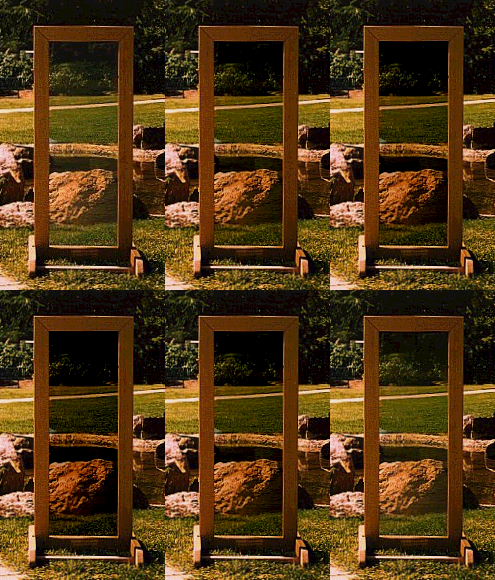
Image used with the permissions of
Sustainable
Technology Australia, Ltd.
"Other switchable glazings need a
constant flow of electricity to maintain their visible state, but the STA SMART Window is
highly energy efficient. An 'EC layer' has a memory that retains the switched state
without continuous applied power. Therefore, electrical voltage applied for a short time
will activate the darkened 'heat reject state' (in which the window transmits sufficient
clear light for human comfort and visibility but rejects virtually all hot infra red
radiation) and the return to the colorless 'low-e state' (in which the window transmits
most of the light but rejects haze heat while maintaining comfortable room conditions)
when required. The product is SMART because it can respond to changes in the climate by
switching between the two states. STA SMART Windows use low voltage DC to operate and
consume virtually no power compared to other switchable glazing."
In the near future, STA SMART Windows can
lead to energy savings in excess of 30% in a wide range of latitudes, with savings from
cooling, lighting and heating applications. The main use of smart windows will be
to balance needs for energy-wasteful air conditioning in buildings in places where
overheating may be a problem during summer, especially in office buildings with large
glass facades, and during winter, when it is necessary to decrease the heat loss from the
interior of buildings through windows.
A second applicable thin-film product in
the area of building integrated photovoltaics (BIPV) and windows is the PowerView™
PV laminate products made by Solarex which is now part of BP Solar. They have been
described as "the perfect building materials" by architects since they blend the
functionality of glazing products as they pass desired levels of natural light into a
building's interior while blocking the remainder and silently converting it to electricity
for use in your building. This is particulaly important since getting the right ambiance
can improve peoples quality of life and productivity in working, shopping and living
environments. |