Component Three
Provide a forecast of what the workforce demand
would be over a five-year period to produce and market your team's technical application
or process. Include the impact such production would have on the marketplace.
The manufacture of our product, which integrates wireless sensors and communications
devices into "smart clothing," will require a variety of workforce skills. These
skills include electrical and electronic equipment assembly, electrical and electronic
engineering, computer hardware engineering, computer software applications engineering,
and computer systems software engineering.
The Monthly Labor Review for November 2005 from the Bureau of Labor Statistics states jobs in these areas like computer system design are among the fastest growing jobs in the United States. According to Al Dill, President of the Blackfox Training Institute, these jobs would not likely be outsourced, because of their complexity and need for skilled workers. The Bureau of Labor Statistics states in their Career Guide to Industries, that there will be demand for research and development as well as for production workers. This means there will be an increase in demand for these occupational areas at all levels, from technical education through two and four year degrees, to graduate degree programs.
While certain parts of the communication market are be on the decline, new smart phones and wireless networks with high data flow ability reamin strong. Wireless communication is a main factor in the growth of the telecommunications industry.
Wireless service already allows connectivity between a diverse group of devices such as, phones, computers, and even television. Our project's suit will open yet another telecommunications application.
The use of smart materials, such as those in our suit, is expected to increase as research makes them more accessible. These smart materials include biological sensors and piezoelectric power sources. Demand is expected to increase for both products as improvements are made and more suits are constructed.
As more development occurs, the economic effects of Smart clothes will increase. While smart textiles will be applied more often to consumer products and biomedical industries, significant use in homeland defense and public safety is expected by 2012.
Our suit would directly impact public safety, and would stimulate the demand and scope of smart textiles for military and biomedical industries.
The Monthly Labor Review for November 2005 from the Bureau of Labor Statistics states jobs in these areas like computer system design are among the fastest growing jobs in the United States. According to Al Dill, President of the Blackfox Training Institute, these jobs would not likely be outsourced, because of their complexity and need for skilled workers. The Bureau of Labor Statistics states in their Career Guide to Industries, that there will be demand for research and development as well as for production workers. This means there will be an increase in demand for these occupational areas at all levels, from technical education through two and four year degrees, to graduate degree programs.
While certain parts of the communication market are be on the decline, new smart phones and wireless networks with high data flow ability reamin strong. Wireless communication is a main factor in the growth of the telecommunications industry.
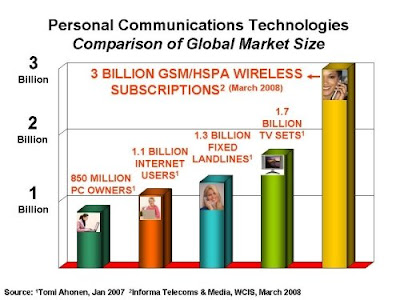
Wireless service already allows connectivity between a diverse group of devices such as, phones, computers, and even television. Our project's suit will open yet another telecommunications application.
The use of smart materials, such as those in our suit, is expected to increase as research makes them more accessible. These smart materials include biological sensors and piezoelectric power sources. Demand is expected to increase for both products as improvements are made and more suits are constructed.

As more development occurs, the economic effects of Smart clothes will increase. While smart textiles will be applied more often to consumer products and biomedical industries, significant use in homeland defense and public safety is expected by 2012.

Our suit would directly impact public safety, and would stimulate the demand and scope of smart textiles for military and biomedical industries.
Give two examples of undergraduate or graduate
degree programs in science or engineering that directly relate to your team's NCT
technical application. For each program, be sure to include the following:
 the
URL address of the institution,
the
URL address of the institution,
the
department (for example, chemical engineering, electronic engineering) where the
program is offered, and
a
brief description of the program of study.
|
At Virginia Polytechnic Institute, undergraduate courses in the Bradley Department of Electrical and Computer Engineering follows two principal degree programs: electrical engineering and computer engineering. We have focused on courses leading to a Bachelor of Science in Computer Engineering (CpE).
VPI has also established a graduate-level Macromolecular Science and Engineering Program, in coordination with the Macromolecules and Interfaces Institute (MURI grant), for researching the use of ionic liquids in electromagnetic devices. |
||||

Image courtesy of the Department of Fiber Science and Apparel Design in the College of Human Ecology Cornell is the first university in the Ivy League to offer a Ph.D in fiber science. In March 2002, Cornell joined the prestigious National Textile Center Consortium (NTC), a group of universities focused on research to sharpen the global competitiveness of the domestic textile and apparel industry. Undergraduates in Fiber Science and Apparel Design may take the following courses in addition to their general education requirements:
Students in this department may apply to work with the
Hinestroza Research Group: Textiles Nanotechnology Laboratory. In December
2002, one student developed a
jacket that heated up when cold, lit up when dark, and included a pulse monitor
for athletes. The jacket used embedded sensors that regulated electroconductive
textiles in the upper back and electro-luminescent wires that run on AA batteries.
Another student created a
positively-charged fabric immersed in negatively charged nano-sized bits
of antibacterial silver which repels germs, allergens, and pollution.
|
||||
|
Due to the critical importance of disaster relief to our project, we have included
a third undergraduate program specializing in emergency services management.
The University of Richmond offers an online bachelor of applied science in Emergency Services Management (ESM). Students take a total of 120 semester hours with 30 hours in their ESM major which allows for the selection of one of three minors: business continuity, emergency management, or Homeland Defense. Core courses help the student focus on emergency services, public administration, budget and finance, as well as management and organization. |




Develop an idea for a new science and/or engineering degree program that might emerge given the advancements in scientific knowledge that the team has identified. Provide a title and 100-word description of this new degree program.
Students entering our graduate degree program, Mobile Communication & Network Engineering,
are expected to take undergraduate courses in electrical engineering to develop
a fundamental understanding of the theory and practices in the design, programming,
and management of remote communication networks. Such jobs require a high degree
of reliability in extreme or hazardous environments. Courses focus on wireless network
systems, their security, hardware, software and improvements.
Students are expected to complete the following courses along with an internship to ensure that they gain the field experience necessary to design equipment that is effective, reliable and relevant in disaster situations.
Students are expected to complete the following courses along with an internship to ensure that they gain the field experience necessary to design equipment that is effective, reliable and relevant in disaster situations.
| Year One | Year Two |
|---|---|
|
Communications Systems Wireless Communication Design Systems Programming Micro/Nano Electronic Mechanical Systems Computer Network Security Digital and Data Communication Internship |
Digital Signal Processing Coding for Reliable Communication Signal and Data Compression Networking in Extreme Environments Adv Computer Architecture Micro/Nano Systems Ergonomic Engineering & Design Internship |
| Electives | |
|
Dynamic Communication Systems Disaster Environments Systems Management |
Engineering Materials & Hardware Design Disaster Operations |
In emails dated 24 February 2009, Mr. Kister stated that:
His company has grown dramatically over the last 5 years. In the last 12 months, we have increased our staff 35-40%. The four basic functions
that Skycasters perform are: installation coordination, billing, technical support,
and engineering. The first three really do not require any specialized skill, just
a brain and the willingness to learn. Installers are required to be bonded, have two-way VSAT certification, people-skills, and keep a neat work area.
However to be an engineer at Skycasters you must have have a lot of experience. For example the senior RF engineer at Skycasters
has spent 30+ years in the Army, which solidifies his experience in the field. The
R&D work done at Skycasters is mostly "mechanical engineering". They make trailers,
flyaways, fuel cell powered systems, etc. that all become massive integration projects
of various pieces of off the shelf technology.
Advanced Imaging- Smart Pants
http://www.advancedimagingpro.com/article/article.jsp?siteSection=38&id=3266&pageNum=1
BCC Research- Advanced Materials
http://www.bccresearch.com/report/AVM023C.html
Bradely Department of Electrical & Computer Engineering- E Textiles
http://www.ccm.ece.vt.edu/etextiles/
BSCPE 4-Year Tentative Curriculum Class of 2009
http://www.ece.vt.edu/ugrad/curriculum/09/cpe09.html
BSEE 4-Year Curriculum Class of 2009
http://www.ece.vt.edu/ugrad/curriculum/09/ee09.html
Component One
https://istf.acmtmhs.org./istf2009/one.html#MURI
Cornell News- Cornell student develops 'smart' jacket that warms, lights up at night and even monitors heart rate
http://www.news.cornell.edu/releases/Dec02/smart.jacket.ssl.html
Cornell News- Cornell joins prestigious research consortium for textiles and apparel following award of national research accolade
http://www.news.cornell.edu/releases/March02/textile.consort.ssl.html
Cornell student develops 'smart' jacket that warms, lights up at night and even monitors heart rate
http://www.news.cornell.edu/releases/Dec02/smart.jacket.ssl.html
Cornell University College of Human Ecology-Fiber Science & Apparel Design Home
http://www.human.cornell.edu/che/fsad/index.cfm
Cornell University College of Human Ecology- Hinestroza Research Group Textile Nanotechnology Laboratory
http://nanotextiles.human.cornell.edu/index.htm
Daily Wireless- Mobile Ad Projections
http://www.dailywireless.org/2008/05/05/7733/
Degree in Emergency Services Management
http://scs.richmond.edu/emergency/
ECE Undergraduate Programs
http://www.ece.vt.edu/ugrad/courses.html
Fiber Science & Apparel Design 2008-2009
http://www.human.cornell.edu/che/Academics/Undergraduate/Student_Services/Registrar/Degree_Progress/upload/FSADIII_08-09.pdf
High Beam Research- Department is now Fiber Science & Apparel Design
http://www.highbeam.com/doc/1G1-173190049.html
Machine Design- Something up the sleeve
http://machinedesign.com/article/something-up-the-sleeve-0928
Nanofabrics -Smart Clothes Repel Germs, Allergens & Pollution
http://www.dailygalaxy.com/my_weblog/2007/10/smart-clothing-.html
Smart Pants- Computer Engineers Develop Clothes that Sense and Interpret Movements
http://www.sciencedaily.com/videos/2006/0402-smart_pants.htm
Textiles Nanotechnology Laboratory
http://www.people.cornell.edu/pages/jh433/index.htm
The Daily Galaxy- Nanofabrics- Start Clothes Repel Germs, Allergens & Pollution
http://www.dailygalaxy.com/my_weblog/2007/10/smart-clothing-.html
The Washington Post-'E-Textiles' May Give 'Custom Tailoring' New Meaning
http://www.washingtonpost.com/wp-dyn/content/article/2007/10/06/AR2007100601097.html
Think- Smart Cloths
http://thinkmagazine.blogspot.com/2008/08/smart-clothes.html
University of Richmond- Emergency
http://scs.richmond.edu/emergency/
Virginia Tech- E-textiles
http://www.research.vt.edu/resmag/2007summer/textiles.html