Personal Water Craft
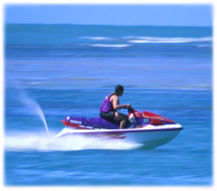
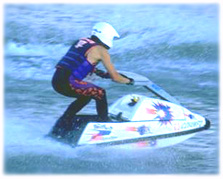
The personal watercraft concept was developed during 1960s by Clayton Jacobsen II of Arizona. Originally a motocross enthusiast, Clayton wanted a craft that could give him a fast-paced recreation on the open water without the encumbrance or expense of a full-sized boat. The design combined the elements of self-power, small size, and a maneuverable, active ride. In the late 1960s, Bombardier, known for their Ski-Doo® snowmobiles, introduced a PWC for the public. This was the first sit down style PWC, however it did not have much success. In 1973, the Kawasaki Jet Ski® was introduced. This original stand-up model had a powerful 400cc engine and handlebar steering. It was the first commercially successful PWC.
Currently there are four companies active in the PWC industry. In the 1980s Kawasaki's Jet Ski® was joined by Yamaha's WaveRunner® and Bombardier Recreational Product's Sea-Doo®. In the 1990s Polaris joined the market. Over the years, the one seat style has changed into the two person style which has recently been joined by the three and even four person style. Although PWC sales peaked in 1995, they have steadily declined since, but the PWC industry is still one of the most lucrative industries.
 |
 |
used with permission of National Parks Conservation Association |
|
Today, racing high performance stand-up and sit-down PWCs is an organized sport and it has competitions throughout the United States. With the newest PWC models capable of top speeds exceeding 60 miles per hour, it is not hard to justify their popularity. "At the same time, personal watercraft have helped expand the concept of the waterside vacation, earning reserved areas on the country's lakes and shorelines. Being thrilling but safe, and easily accessible through rental as well as purchase, PWC will continue to become more popular every year."