Component One
Prepare a 200- to 300-word history about the National Critical Technology (NCT)
technical application your team has selected to solve a local or national problem.
Pollution is not a new problem to mankind. It has been documented that the Romans created
vast sewer systems to get rid of their human waste. The need to dispose of waste
has grown just as the human population has grown. With the
growth has come the need to not only dispose of human waste but also to
cope with industrial, chemical, and just massive amounts of trash. Moreover, new
technologies have brought with them new pollution sources that have, more often
than not, been accompanied by severe and unexpected
disasters, illnesses, and deaths. Some of these catastrophies are:
- Acid rain, acidic precipitation in industrial areas, mid-19th century
- The Love Canal Tragedy in New York state, 1920's
- The Donora Death Fog in Donora, Pennsylvania, October 31, 1948
- Ozone Depletion, chlorofluorocarbon, CFC, research by Rowland and Molina, 1970's
- Three Mile Island in Middletown, Pennsylvania, March 28, 1979
- Chernobyl Nuclear Power Plant Accident in the Ukraine, April 1986
- Exxon Valdez oil spill, ran aground on Bligh Reef in Prince William Sound, Alaska, March 24, 1989
- Mound Laboratories in Montgomery County, Ohio, added to National Priorities List on November 21, 1989
- Global Warming, Intergovernmental Planel on Climate Change (IPCC), December 6, 1988, 1st Assessment - 1990
Cite three detailed examples of research done in the past 3 to 5 years which focused
on the NCT technical application your team selected. Include:
 the funding agency,
the principal investigator's name, and
the institution where the research is or was being conducted.
the funding agency,
the principal investigator's name, and
the institution where the research is or was being conducted.
We chose the following three grants to illustrate how pollution concerns are being
funded and researched. The first one deals with mapping plastic pollution in the Pacific,
the second one deals with plasma gasification as a method of municipal waste management,
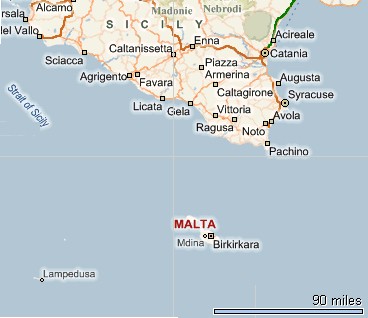
and the third one deals with cleaning up oil spills in the Mediterranean near Malta.
Grant 1: In 2009, the state of California's Whale Tail License Plate granted $8,350 to the Algalita Marine Research Foundation (AMRF), raising their budget for their studies on the "Garbage Patch" to $38,248. The goal for the AMRF's project is to develop a website featuring research maps and results using geographic information system, or GIS technology, illustrating what is known about the quantity and concentration of plastic debris in the Pacific Ocean. While targeting a wide-range of age groups, the website will also provide high-quality technical data that can be used by other researchers.
Grant 2: In 2007, the state of Minnesota granted $400,000 to Koochiching Economic Development Authority (KEDA) for a plasma gasification feasibility study. Dr. Louis Circeo, director of plasma research at Georgia Tech Research Institute, has proposed an operation that converts garbage and biomass into usable fuel through superheating in an oxygen-deprived container. This process would provide a technological alternative to land fills and a more efficient disposal of plastics.
Grant 3: In 2005, Maltese Maritime Authority (MMA), headed by Chris Farrugia, originally submitted a request to fund a €1,000,000 project for oil spill management. Malta has one-fourth of the world's oil tankers traveling in its waters, and they easily run the risk of an oil spill. They are not currently equipped to handle a large oil spill; consequently, they would spend an inordinate amount of time waiting for assistance rather than containing and cleaning up the spill. In 2008, an €800,000 grant was awarded by European Economic Area (EEA) in Norway leaving MMA responsible for funding the remaining 20%. As of 2009, through project MT0010, MMA has contracted approximately €200,000 of its funds.
In addition to our three grants, we have also identified three patents that directly relate to our project.
Grant 1: In 2009, the state of California's Whale Tail License Plate granted $8,350 to the Algalita Marine Research Foundation (AMRF), raising their budget for their studies on the "Garbage Patch" to $38,248. The goal for the AMRF's project is to develop a website featuring research maps and results using geographic information system, or GIS technology, illustrating what is known about the quantity and concentration of plastic debris in the Pacific Ocean. While targeting a wide-range of age groups, the website will also provide high-quality technical data that can be used by other researchers.
Grant 2: In 2007, the state of Minnesota granted $400,000 to Koochiching Economic Development Authority (KEDA) for a plasma gasification feasibility study. Dr. Louis Circeo, director of plasma research at Georgia Tech Research Institute, has proposed an operation that converts garbage and biomass into usable fuel through superheating in an oxygen-deprived container. This process would provide a technological alternative to land fills and a more efficient disposal of plastics.
Grant 3: In 2005, Maltese Maritime Authority (MMA), headed by Chris Farrugia, originally submitted a request to fund a €1,000,000 project for oil spill management. Malta has one-fourth of the world's oil tankers traveling in its waters, and they easily run the risk of an oil spill. They are not currently equipped to handle a large oil spill; consequently, they would spend an inordinate amount of time waiting for assistance rather than containing and cleaning up the spill. In 2008, an €800,000 grant was awarded by European Economic Area (EEA) in Norway leaving MMA responsible for funding the remaining 20%. As of 2009, through project MT0010, MMA has contracted approximately €200,000 of its funds.
In addition to our three grants, we have also identified three patents that directly relate to our project.
- Feb 4, 1992
- #5085998 Biodegradation of 2,4,6-trinitrotoluene by white-rot fungus by Carmen
A Lebron, Leslie A. Karr, Tudor Fernando and
Steven D. Aust provides a process for biodegradation of Trinitrotoluene.
TNT is an explosive used by the military, that resulted in adjacent wastewater,
surface water, and ground water becoming contaminated, producing "pinkwater."
When processed by the
white-rot fungus, the water would become environmentally acceptable.
- Jun 1, 1999 -
#5908880 Composition for forming water-permeable material and process for producing
the same by Tadami Kamaishi and Hideaki Tanisugi depicts a water-permeable material
that is resistant to chemical and water degradation as well as a variety of weather
conditions. The composition includes aggregate grains, an epoxy resin and a curing agent having an average particle
size of 0.5-20 mm.
- Sep 28, 1999 -
#5958264 Plasma gasification and vitrification of ashes by Peter G. Tsantrizos,
Michel G. Drouet, and Theodora Alexakis outlines a method using a plasma arc
to gasify and subsequently convert the slag into glass. In their furnace, the plasma
arc burns off the organics in the ashes to produce combustion gases, which are then
used as a source of energy for the boiler, allowing the accumulated molten slag
to be periodically removed.
Based on the research your team has done, explain how the NCT application chosen
has advanced scientific knowledge.
Scientific advances often come at a sacrifice to the environment. Sometimes in using
new technologies to solve current problems or create new conveniences, we generate
additional unforeseen pollution problems. Many times, the resulting pollution is
more pervasive and dangerous than we could have ever predicted. Three situations
showing how technology has come to the aide in monitoring and/or controlling pollution
are methane and carbon monoxide emissions, acid rain, and lessening the repercussions
of our current plastic, throw-away, society.
In December, 1999, the people of the Canadian Space Agency realized the hazard of worldwide carbon emissions. They launched the Measurements of Pollution in the Troposphere (MOPITT) experiment on board NASA's Terra Satellite.
The experiment monitors methane, CH4, and carbon monoxide, CO, discharges using gas correlation spectroscopy. Improved quantitative data of the source strengths of distributions of methane will assist scientists in being able to understand biogeochemical cycles. A video from NASA's Goddard Space Flight Center (globe3d.wmv) shows 10 months of emissions in 2000. The large plumes from Africa and South America are believed to be forest and grassland fires, while the red zone in Southeast Asia is thought to be an industrial emission.
Acid rain was originally recognized by Robert Angus Smith in 1852, when he noticed that emissions from local factories were damaging plants in neighboring forests. Acid rain came to the forefront of the news during 1960's and 1970's. This rain was mostly caused by the sulfur dioxide emissions from large industrial sites and the discharge of nitrogen oxide from automobiles. In an effort to fix this problem the 1970 Clean Air Act was passed by the Environmental Protection Agency. This act called for a 90-percent cut in automobile emissions for new cars by 1975. The mandatory product placed in cars to decrease their emissions of carbon monoxide, volatile organic compounds, and nitrogen oxides was the catalytic converter. However, with every solution, comes a new problem, in this case how to safely recycle used converters.
The use of scrubbers were implemented by power plants across the United States to catch sulfur, nitrogen oxides, and mercury emissions from their coal furnaces. These wet scrubbers effectively reduced the sulfur dioxide emissions by 80-95 percent by forcing the exhaust gases through a spray of lime water to produce a solid called calcium sulfate. Dry scrubbers, also known as electrostatic technology, can also be used to separate charged smoke particles thereby creating a dry waste product. In Februarym 2008, Georgia Tech announced a new solid absorbent called hyperbranched aminosilica that could capture 7 times more carbon dioxide. This new absorbent could be recycled and reused. In 1998, TVA and local farmers discovered that scrubber sludge when applied as a fertilizer improved soil and increased crop yields. Later, construction companies also wanted to capitalize on the sludge since calcium sulfate, also known as gypsum, was a raw material used to make wallboards. What was once a pollutant has become a valued resource.
In January, 2008, The Science Tech Entrepreneur stated that "the total volume of plastics produced worldwide has surpassed that of steel and continues to increase." As we consider a solution to our current dilemma with discarded plastic and its subsequent pollution, new types of plastic will become more commonplace. While oil-based polymers can degrade through exposure to light, heat, and especially stress, there are plastics that are made from starch that can be completely broken down by composting. These green plastics, or bioplastics, are just now becoming cheap enough to be used commercially. On Earth Day 2010, Frito-Lay will introduce a compostable SunChips bag to signal the beginning of its green packaging effort.
In December, 1999, the people of the Canadian Space Agency realized the hazard of worldwide carbon emissions. They launched the Measurements of Pollution in the Troposphere (MOPITT) experiment on board NASA's Terra Satellite.

The experiment monitors methane, CH4, and carbon monoxide, CO, discharges using gas correlation spectroscopy. Improved quantitative data of the source strengths of distributions of methane will assist scientists in being able to understand biogeochemical cycles. A video from NASA's Goddard Space Flight Center (globe3d.wmv) shows 10 months of emissions in 2000. The large plumes from Africa and South America are believed to be forest and grassland fires, while the red zone in Southeast Asia is thought to be an industrial emission.
Acid rain was originally recognized by Robert Angus Smith in 1852, when he noticed that emissions from local factories were damaging plants in neighboring forests. Acid rain came to the forefront of the news during 1960's and 1970's. This rain was mostly caused by the sulfur dioxide emissions from large industrial sites and the discharge of nitrogen oxide from automobiles. In an effort to fix this problem the 1970 Clean Air Act was passed by the Environmental Protection Agency. This act called for a 90-percent cut in automobile emissions for new cars by 1975. The mandatory product placed in cars to decrease their emissions of carbon monoxide, volatile organic compounds, and nitrogen oxides was the catalytic converter. However, with every solution, comes a new problem, in this case how to safely recycle used converters.
 |
 |
| Image courtesy of Import Catalytic | Image courtesy of How Stuff Works |
The use of scrubbers were implemented by power plants across the United States to catch sulfur, nitrogen oxides, and mercury emissions from their coal furnaces. These wet scrubbers effectively reduced the sulfur dioxide emissions by 80-95 percent by forcing the exhaust gases through a spray of lime water to produce a solid called calcium sulfate. Dry scrubbers, also known as electrostatic technology, can also be used to separate charged smoke particles thereby creating a dry waste product. In Februarym 2008, Georgia Tech announced a new solid absorbent called hyperbranched aminosilica that could capture 7 times more carbon dioxide. This new absorbent could be recycled and reused. In 1998, TVA and local farmers discovered that scrubber sludge when applied as a fertilizer improved soil and increased crop yields. Later, construction companies also wanted to capitalize on the sludge since calcium sulfate, also known as gypsum, was a raw material used to make wallboards. What was once a pollutant has become a valued resource.
 |
 |
| Image courtesy of U.S. Fish & Wildlife Service | Image courtesy of Virtual Chembook |
In January, 2008, The Science Tech Entrepreneur stated that "the total volume of plastics produced worldwide has surpassed that of steel and continues to increase." As we consider a solution to our current dilemma with discarded plastic and its subsequent pollution, new types of plastic will become more commonplace. While oil-based polymers can degrade through exposure to light, heat, and especially stress, there are plastics that are made from starch that can be completely broken down by composting. These green plastics, or bioplastics, are just now becoming cheap enough to be used commercially. On Earth Day 2010, Frito-Lay will introduce a compostable SunChips bag to signal the beginning of its green packaging effort.
 |
 |
|
Image courtesy of
Biodegradable Products Institute |
Image courtesy of
MatteR Network |
Acid Rain - Causes
http://library.thinkquest.org/26026/Environmental_Problems/acid_rain_-_causes.html
Acid Rain in New England
http://www.epa.gov/NE/eco/acidrain/history.html
Acid Rain - Solutions
http://www.elmhurst.edu/~chm/vchembook/197acidrainsoln.html
Backgrounder on the Three Mile Island Accident
http://www.nrc.gov/reading-rm/doc-collections/fact-sheets/3mile-isle.html
California Coastal Commission
http://documents.coastal.ca.gov/reports/2009/5/W28a-5-2009.pdf
Chernobyl Accident
http://www.world-nuclear.org/info/chernobyl/inf07.html
Composition for forming water-permeable material
http://www.google.com/patents?id=RPoYAAAAEBAJ&printsec=abstract&zoom=4&source=gbs_overview_r&cad=0#v=onepage&q=&f=false
EPA Milestones
http://www.epa.gov/OMS/invntory/overview/solutions/milestones.htm
Exxon Valdez oil spill
http://www.eoearth.org/article/Exxon_Valdez_oil_spill
Fair winds in Denmark - environment - Brief Article
http://findarticles.com/p/articles/mi_m1594/is_4_12/ai_76020603/
Global Warming Fast Facts
http://news.nationalgeographic.com/news/2004/12/1206_041206_global_warming_2.html
Guide to Geographical Information Systems
http://www.gis.com/
How Catalytic Converters Work
http://auto.howstuffworks.com/catalytic-converter.htm
Intergovernmental Panel on Climate Change
http://www.ipcc.ch/organization/organization_history.htm
KEDA Press Release
http://www.businessupnorth.com/pr_0507_1.shtml
Koochiching Economic Development Authority
http://www.businessupnorth.com/
NASA/CSA Monitor Provides Global Air Pollution View
http://www.gsfc.nasa.gov/gsfc/earth/terra/co.htm
Ozone Loss: The Chemical Culprits
http://www.beyonddiscovery.org/content/view.page.asp?I=89
Pollution: a brief history
http://www.eoearth.org/article/Pollution:_a_brief_history
Pollution Issues
http://www.pollutionissues.com/Fo-Hi/History.html
Pollution History
http://www.pages.drexel.edu/~ral28/histor~1.htm
Public Health Assesment
http://www.atsdr.cdc.gov/hac/pha/pha.asp?docid=634&pg=1#back
The Donora Fluoride Fog
http://www.fluoridation.com/donora.htm
The Fungus among Us: Use of White Rot Fungi to Biodegrade Environmental Pollutants
http://ehp.niehs.nih.gov/docs/1993/101-3/innovations.html
The Love Canal Tragedy
http://www.epa.gov/history/topics/lovecanal/01.htm
US Patent 5085998 - Biodegradation of 2,4,6-trinitrotoluene by white-rot fungus
http://www.patentstorm.us/patents/5085998/claims.html
US Patent 5958264 - Plasma gasification and vitrification of ashes
http://www.patentstorm.us/patents/5958264.html