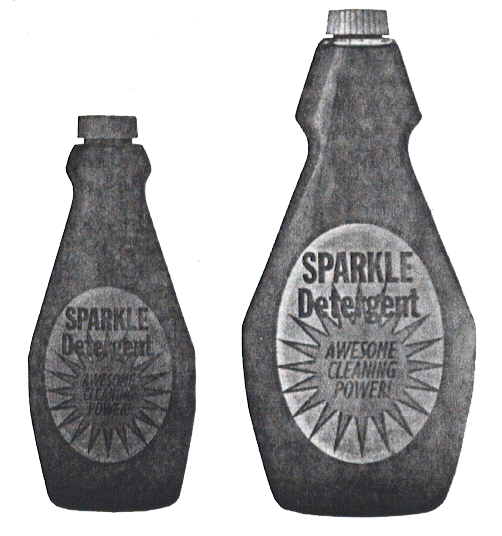
Investigate
- Read about unit pricing and shopping on a budget in a consumer math
or home economics book.
- Talk to people who shop for their households. Ask how they make
decisions on which brands and which sizes to purchase.
Set Your Direction
- Will you shop at several stores or at one? Some stores have unit
prices printed on small tags.
- Will you list specify which brands to buy? Will it include non-food
items
Make a Plan
- Make a calendar for each day's work. Check in with your group and
with your teacher.
- A calculator will be useful.
Collect and Organize your information
- Make a list of at least 10 items.
- Prepare a chart from the list, with spaces for the prices and
quantities of different-sized containers of the same product.
- The chart will be more convenient if you organize it like the shelves of a grocery store, with categories
for canned goods, bread and pasta, fresh produce, and so on.
|
Carry out your plan
- "Shop" for each item. You do not have to buy anything.
Record on the chart the prices of each size offered of a particular product and how much
each container holds.
- For each different size of an item, calculate the unit price by
dividing the price by the quantity.
- Use standard units. That is, if an item is sold by the pound,
calculate the price per ounce.
- Decide which size of each product has the lowest unit price. Is it
always true that the largest size has the lowest unit price? What is the total bill?
Look Back
- If a shopper knows the unit price of various sizes, why might he or
she buy a different size anyway?
- If the unit prices of two different brands are the same, how do you
decide which to buy?
- If you have a coupon for a particular product, how would you adjust
the unit price?
|