

Steps to Making a Balloon Ball



 Inflate
one balloon until it feels tight, but not stretched. (This seems so subjective… Your
goal is that the balloon be inflated as big as possible while still being able to be
covered with an inflated balloon.)
Inflate
one balloon until it feels tight, but not stretched. (This seems so subjective… Your
goal is that the balloon be inflated as big as possible while still being able to be
covered with an inflated balloon.)
 Tie a
knot in the "neck" of a balloon
Tie a
knot in the "neck" of a balloon
 Clip the "neck" of another balloon as shown in the illustration below.
 One
Student should stretch the clipped balloon while the partner stuffs the inflated balloon
inside. Once this is done (the WORST is over), another balloon is clipped and used to
cover the inflated balloon ball.
One
Student should stretch the clipped balloon while the partner stuffs the inflated balloon
inside. Once this is done (the WORST is over), another balloon is clipped and used to
cover the inflated balloon ball.
 Continue
covering until all the balloons have been used.
Continue
covering until all the balloons have been used.
 An
oblong balloon can be "rounded" by positioning the open end of the clipped
balloon in different spot each time. Clip the "ring" off <image> the
remaining band and use it to decorate and shape the balloon ball.
An
oblong balloon can be "rounded" by positioning the open end of the clipped
balloon in different spot each time. Clip the "ring" off <image> the
remaining band and use it to decorate and shape the balloon ball.
Number of balloons used to make
your bouncing balloon:

Drop Height Bounce Height
(X) (Y) Y/X
cm |
cm |
|
cm |
cm |
|
cm |
cm |
|
cm |
cm |
Average of this
column:
Drop Height Bounce Height
(X) (Y) Y/X
cm |
cm |
|
cm |
cm |
|
cm |
cm |
|
cm |
cm |
 Average
of this
Average
of this
column:
….find the average of your two averages! We will call this number the constant of you function.

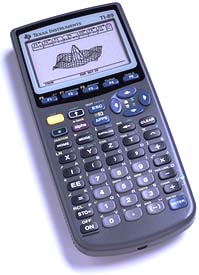
Under the best of scientific testing conditions, the function of your Balloon Ball would have been a Linear Function, meaning that it’s graph would be on a line.
Let’s see how close you came to optimum conditions by graphing your X’s and Y’s from both trials…..
 …..how did you do? Are your results an approximation of
a line? What are some casual factors?
…..how did you do? Are your results an approximation of
a line? What are some casual factors?



 Once again, what was the constant of your function?
 What
was the constant of your partner's function?
What
was the constant of your partner's function?
 How would you account for the difference in your constant
and your partner's constant? (Give at least two possible causes)
How would you account for the difference in your constant
and your partner's constant? (Give at least two possible causes)
 How
could you use your constant to make predictions concerning your bouncing balloon?
How
could you use your constant to make predictions concerning your bouncing balloon?
 Let’s
try! If the Drop Height were , what would you predict the Bounce
Height to be?
Let’s
try! If the Drop Height were , what would you predict the Bounce
Height to be?

 How
did your experimental results compare with your predicted results? Explain any
similarities or differences.
How
did your experimental results compare with your predicted results? Explain any
similarities or differences.